<VECTOR 3>
de-optimization
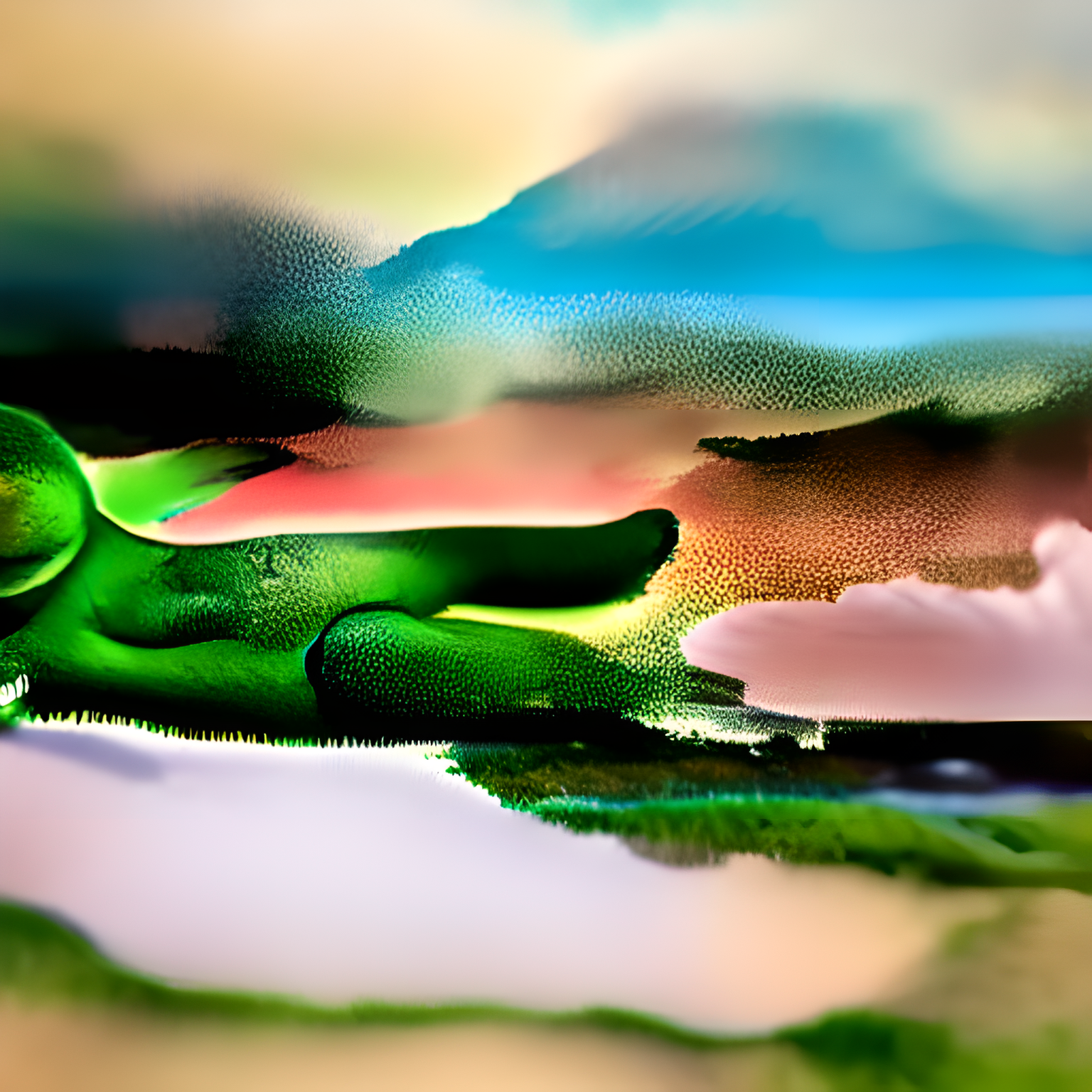 <vector-view-3>: de-optimization: Image generated by the author by giving Stable Diffusion 1.5 the prompt “ĮãĤĬãģŁãģĦ”, upscaled with the Real-Enhanced Super-Resolution Generative Adversarial Networks (R-ESGRAN) model
As explained in <VECTOR 1>, the majority of AI generated images today are created using diffusion models, not hacked image classifiers like <VECTOR 2>. While it is *technically* possible to setup+train ur own diffusion model from scratch, the vast majority of AI generated images today are being produced w/user facing applications created/controlled by companies like Midjourney && OpenAI's DALL-E (which i used to produce <vector-view-1>). While the ease of use afforded by these apps has in many ways democratized access to these algorithms, for the glitch artist this convenience may come at a cost. To re:phrase11 Curt Clonginger:
"the danger of [midjourney and DALL-E] is not the threat that they may wind up archiving and owning all the 'content' I produce, or that they are currently getting rich of the content I produce [or that they scraped much of our work without permission to train the algorithms to produce such content], but that they control the parameters within which I produce 'my original' content [...] we should be asking ourselves, who are the meta-producers? who produce the contexts surrounding 'creative' prosumer productions? who produce the tools that suggest the proper 'way' in which [artists] are to produce?"
When a user enters their text prompt into an app running a diffusion model, like DALL-E, they must typically wait for a few seconds before seeing the resulting image[s]. While they wait they are presented w/a progress bar, but behind the scenes a much more interesting visualization is taking place. These diffusion models take their name from a key aspect of this process: each image begins w/Gaussian noise, a *somewhat* randomized matrix of pixels, then through an algorithmic process, like a stochastic differential equation, or SDE, the gaussian noise is "de-noised" && smoothly transformed into the image prompted by the user. This denoising process is called "sampling". One of the ways tools like DALL-E "suggest the proper 'way' in which artists are to produce" (Cloninger) is by deciding for us what the most optimized settings for producing the “highest quality” image might be, like which sampling method to use (SDE is one of many) && how many times, or "steps", to run it. Glitch artists, however, often prefer to intentionally de-optimize an application's settings so that it might perform "poorly", for ex: rendering overly compressed video to invoke video artifacts.
Trained AI models are already black boxes, but these functions become even more opaque when interfaced w/via these user-facing AI "apps". By depending on these corporate interfaces, we rob ourselves of potential creative misuses of the code behind the apps. But our options are not strictly binary, there's a gradient of modes between the push-button prompt boxes of DALL-E used in <VECTOR 1> && de-constructing ur own neural network in python code like the researchers ref’d in <VECTOR 2>. By embracing open source alternatives--like Stable Diffusion, a collaboratively trained model--we can have our app && glitch it too. B/c it's open source, Stable Diffusion is not only freely available, but the community has created a number of variations12 + modes of interfacing w/it. Most of the graphical apps created by the community (ex: A1111) provide a much wider degree of control than Midjourney or DALL-E && if u setup these apps on ur own computer, having access to the code means u can experiment/hack it any way u like.
<vector-view-3> was created using the Stable Diffusion model v1.5 w/DPM (Diffusion Probabilistic Model Sampling) as the sampling method. There's lots of discussion around what the most optimized combination of sampling methods + steps + other settings for achieving “high quality” results, ignoring these recommendations almost always guarantees images saturated w/digital artifacts unique to the model && the particular sampling method chosen. Just as the diff compression algorithms used to create JPGs or PNGs glitch different when corrupted, b/c the diff sampling methods approach the denoising process diff'ly, they each "glitch" diff'ly when de-optimized.